





How Long Does It Take to Build a Website? Complete Timeline Guide for Businesses in 2026
How Long Does It Take to Build a Website?
One of the most common questions businesses ask before starting a digital project is: “How long does it take to build a website?”
The answer depends on several factors, including the type of website, design complexity, features, content requirements, and development approach.
A simple business website may take 1–4 weeks, while a larger eCommerce or custom platform could require 2–6 months or longer.
Understanding the website development timeline helps businesses plan budgets, launches, marketing campaigns, and growth strategies more effectively.
At Innoric Infosystems, Gorakhpur, we help businesses create websites with realistic development timelines, scalable functionality, and modern user experiences.
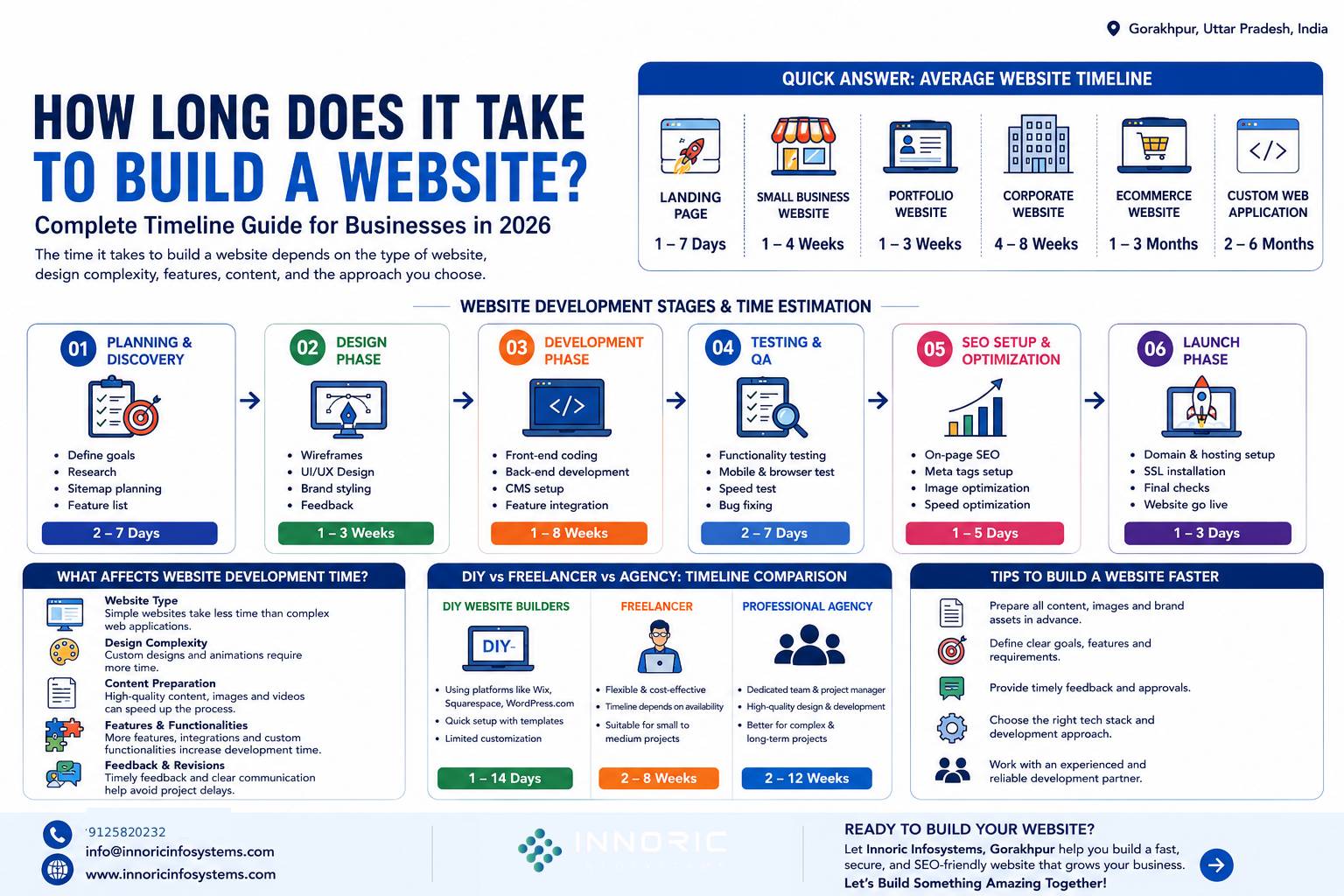
Quick Answer: Average Website Development Timeline
Here is a quick breakdown of common website timelines:
| Website Type | Estimated Timeline |
|---|---|
| Landing Page Website | 1–7 Days |
| Small Business Website | 1–4 Weeks |
| Portfolio Website | 1–3 Weeks |
| Corporate Website | 4–8 Weeks |
| eCommerce Website | 1–3 Months |
| Custom Web Application | 2–6 Months |
These timelines can vary based on customization, revisions, integrations, and project requirements.
What Factors Affect How Long It Takes to Build a Website?
Several elements influence website development speed.
1. Website Type
The kind of website you are building directly impacts development time.
Examples include:
- Personal portfolios
- Business websites
- eCommerce stores
- Membership platforms
- Educational websites
- Booking systems
- Custom web applications
A basic informational website naturally takes less time than a custom software-driven platform.
2. Design Complexity
Website design plays a major role in timeline estimation.
Simple template-based designs may be completed quickly.
However, fully customized UI/UX projects often require extra time for:
- Wireframing
- Brand alignment
- Visual design
- Responsive optimization
- User experience testing
More complex designs generally increase project duration.
3. Content Preparation
Website development is not only about coding.
Content creation also affects delivery timelines.
Projects may require:
- Service page writing
- Product descriptions
- Blog content
- Photography
- Videos
- Branding assets
- SEO optimization
Missing content is one of the most common causes of website launch delays.
How Long Does Each Stage of Website Development Take?
Website creation typically follows several structured phases.
Planning and Discovery Phase — 2–7 Days
Before development begins, teams usually define:
- Business objectives
- Website goals
- Audience requirements
- Feature expectations
- Sitemap planning
Strong planning reduces project confusion later.
Design Phase — 1–3 Weeks
During the design stage, developers and designers create:
- Layout structures
- Visual mockups
- Mobile responsiveness
- User experience flows
- Brand styling
Feedback cycles can influence completion speed.
Development Phase — 1–8 Weeks
This stage includes actual website building.
Developers may work on:
- Frontend development
- Backend functionality
- CMS configuration
- Contact forms
- Payment integration
- API connections
- Security setup
Complex functionality typically increases build time.
Testing and Quality Assurance — 2–7 Days
Before a website goes live, proper testing is essential.
Skipping testing may result in performance issues, broken functionality, poor user experience, or security risks.
During this stage, teams commonly test:
- Mobile responsiveness
- Browser compatibility
- Contact forms
- Payment gateways
- Website speed
- Navigation flows
- Security settings
- Content formatting
Thorough testing helps ensure a smoother website launch.
SEO Setup and Optimization — 1–5 Days
A website should not only look professional — it should also be discoverable on search engines.
SEO implementation often includes:
- Meta titles and descriptions
- Keyword optimization
- Image optimization
- URL structure setup
- Internal linking
- Mobile optimization
- Schema markup
- Page speed improvements
Building SEO during development is usually faster and more effective than adding it after launch.
At Innoric Infosystems, Gorakhpur, SEO readiness is integrated into website development planning.
Website Launch Phase — 1–3 Days
Once development and testing are completed, the website moves to deployment.
Typical launch activities include:
- Domain configuration
- Hosting setup
- SSL certificate installation
- Database migration
- Final backup creation
- Performance monitoring
- Security verification
A successful launch requires careful preparation to minimize downtime and technical issues.
Website Timeline by Website Type
Different websites require different levels of planning, development, and testing.
Simple Landing Page — 1–7 Days
Landing pages are typically faster to develop because they focus on a single goal.
Common use cases:
- Product promotion
- Lead generation
- Event registration
- Campaign marketing
Small Business Website — 1–4 Weeks
Most small business websites include:
- Home page
- About page
- Services section
- Contact page
- Inquiry forms
These projects generally have shorter development cycles.
eCommerce Website — 1–3 Months
Online stores require additional functionality such as:
- Product catalogs
- Payment gateways
- Order management
- Shipping setup
- User accounts
- Security compliance
This increases development time.
Custom Web Applications — 2–6 Months
Custom projects often involve advanced functionality, including:
- User dashboards
- API integrations
- Database logic
- Role-based access
- Custom workflows
- Automation features
Because of their complexity, custom web applications typically require longer timelines.
DIY vs Freelancer vs Agency: Which Option Is Faster?
Businesses often compare different website creation approaches.
DIY Website Builders
Estimated Timeline: 1–14 Days
Pros:
- Quick setup
- Lower upfront cost
- Beginner friendly
Limitations:
- Limited customization
- Design restrictions
- Scalability concerns
Freelance Web Developers
Estimated Timeline: 2–8 Weeks
Pros:
- Flexible collaboration
- Cost-effective for smaller projects
- Customization opportunities
Limitations:
- Availability issues
- Single-resource dependency
- Variable support quality
Professional Website Development Agencies
Estimated Timeline: 2–12 Weeks
Pros:
- Dedicated teams
- Strong project management
- Design + development expertise
- Long-term scalability support
Limitations:
- Higher investment
- More structured workflows
The best option depends on business goals, budget, project complexity, and growth expectations.
How to Build a Website Faster
If you want to reduce website development time, consider these strategies:
Prepare Content Early
Have your content ready before development begins.
This includes:
- Brand assets
- Images
- Website copy
- Product information
- Service descriptions
Define Clear Requirements
Ambiguous project goals often cause delays.
Clearly outline:
- Features
- Design expectations
- Business objectives
- Technical requirements
Minimize Revision Cycles
Frequent design changes can significantly extend timelines.
Establish approval processes early to maintain momentum.
Choose the Right Development Partner
Experienced developers and agencies can streamline workflows and reduce avoidable setbacks.
Frequently Asked Questions (FAQs)
How long does it take to build a professional website?
A professional website typically takes 2–8 weeks, depending on design complexity, features, and project requirements.
Can a website be built in one week?
Yes. Simple websites or landing pages can sometimes be completed within a week, especially using templates or website builders.
Why do some websites take months to develop?
Large websites often involve advanced design, integrations, custom functionality, testing, SEO, and extensive content preparation.
Does website content affect development time?
Yes. Delays in providing content, images, branding assets, or approvals can extend project timelines significantly.
What is the fastest way to build a business website?
Using templates, clear project requirements, prepared content, and experienced developers can help accelerate delivery.
Conclusion: Website Development Timelines Depend on Your Goals
There is no single timeline that fits every website project.
Simple websites may be completed in days, while advanced business platforms can require several months.
The key factors influencing development speed include:
- Website type
- Design complexity
- Content readiness
- Technical requirements
- Testing needs
- SEO implementation
Understanding these variables allows businesses to set realistic expectations and make smarter digital investment decisions.
If you are planning a new website project, partnering with an experienced development team can help ensure a smoother process, faster delivery, and better long-term results.
Innoric Infosystems, Gorakhpur helps businesses build scalable, SEO-friendly, and professionally designed websites tailored to their timelines and growth goals.