






Imagine a world where AI coding takes seconds instead of years. A single prompt gets you thousands of clean lines of code. Developers around the world fell in love with these new tools, believing they’ve discovered a time-machine.
But the love comes with a price. There is a dark side to this seemingly magical technology.
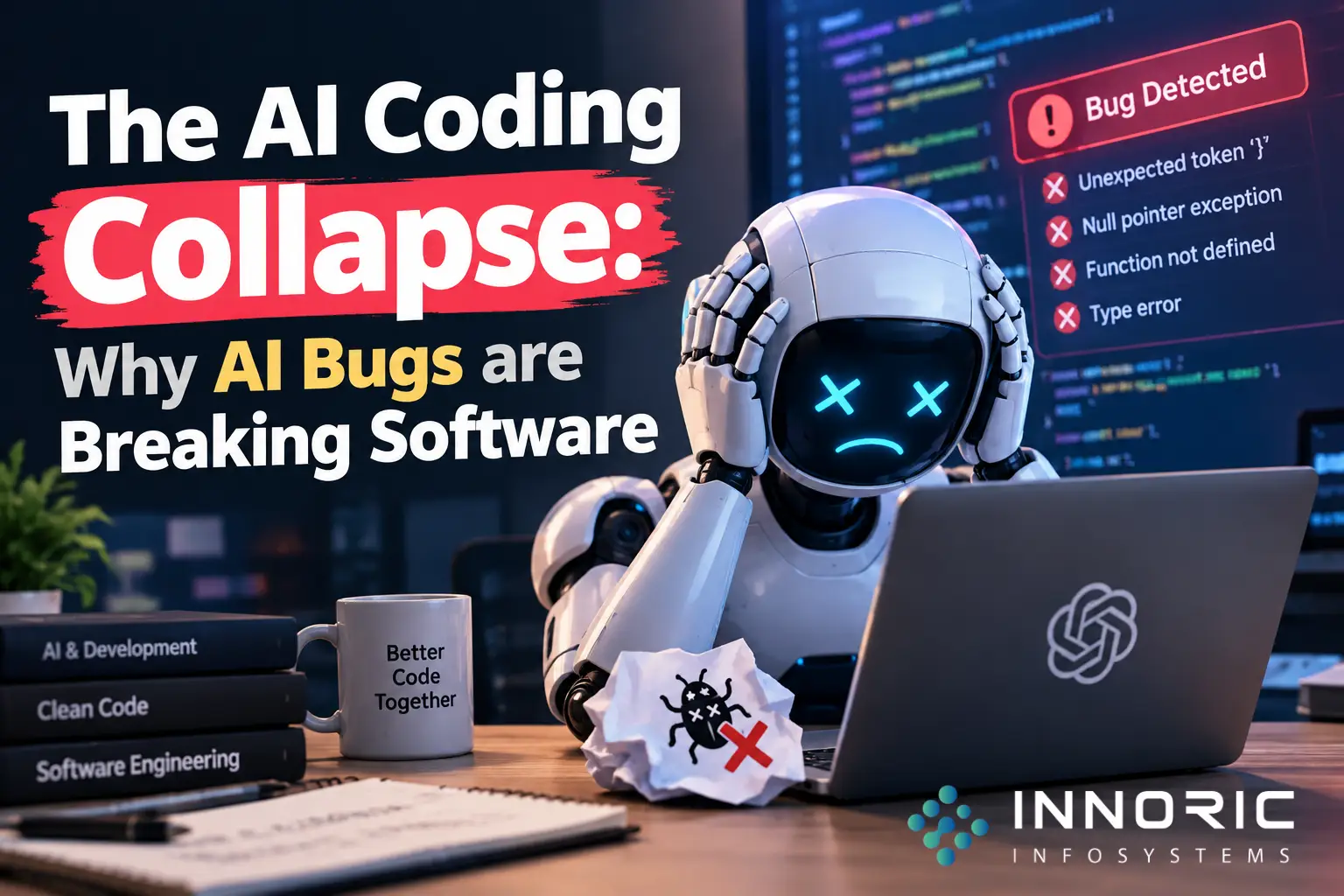
Right now, in the world of code, there is a mass extinction. Teams burn out. Codebases rot. Everything crashes. The cause? The very technology that promised to save modern software engineering: bugs from AI coding assistants. We are living in the midst of what some call the AI Coding Collapse, a crisis in which we have adopted so much artificial intelligence that it has threatened the existence of modern software infrastructure.
In this essay, we will discuss why this crisis happened, what it costs software teams, and what engineering managers can do to both survive and adapt to this wave of AI-generated bugs
1. The Numbers: Why this Crisis Happened
Software engineering teams around the world are realizing that fast code comes with a cost.
Here’s the numbers:
90%+ of all developers worldwide use AI coding assistants
according to recent industry research. 45% of the code produced by these AI tools contain critical bugs or security flaws. Teams today are spending up to 30-40% of their budgets refactoring code or addressing security vulnerabilities that came from AI tools compared to 0-10% in the years before AI coding assistants. Speed comes at a cost. But why so many bugs?
2. The Why: 3 Simple Reasons Why AI Assistants Create More Bugs than Humans
Let’s talk about why AI code completion tools lead to more bugs than standard human coding:
Reason #1: The Hallucinated Library
AI tools often generate made up libraries or suggest using old legacy libraries that are no longer supported or secure. The use of these libraries opens the codebase to attack surface exploitation by malicious hackers.
Reason #2: The Edge Case Blind Spot
An AI model knows the most common ways to implement a function, but it does not know the less common ways (edge cases) that may arise in production due to rare user behavior. Because of this, code generated by AI tools is much more likely to break due to unexpected input.
Reason #3: The Pretty Code Delusion
Code generated by AI tools often looks clean and professional. This gives developers a false sense of security, causing them to believe the code is correct and move on to the next task. Developers tend to spend less time analyzing “pretty code” because they assume there are fewer bugs.
3. The Hidden Tax: Why “Fast Code” is Hurting Your Productivity
In software engineering, Technical Debt is the cost imposed on future development due to the choice of taking the easy way out today. Technical debt takes many forms: choosing an inferior, but quick-to-implement architecture; writing tests incorrectly; or even poor documentation.
AI coding tools are the ultimate source of technical debt.
[Random Prompt] ➔ [AI Assistant Outputs 500 Lines of Code] ➔ [The Code Works in Dev/Test Environment] ➔ [The Code Breaks in Production] ➔ [The Engineering Team Takes 3 Days to Find the Issue]
While AI coding assistants promise to accelerate the coding process, they also create tremendous technical debt. Code written by an AI assistant is rarely fully understood by the humans who implement it. When a bug occurs, it takes 3x longer to debug since the developer who wrote the code didn’t write it in the first place. Engineering teams are sacrificing long-term productivity for short-term gains in development speed.
4. How to Adapt: 4 Ways to Survive the AI Coding Avalanche
AI code completion tools are not going anywhere. They are incredibly useful when used correctly. But in order to truly benefit from them, engineering managers must change how their teams work
Here are 4 ways software teams can adapt to the rise of AI coding assistants:
Treat AI Tools Like an Intern: Code generated by interns is rarely production-ready, requiring extensive code reviews to ensure quality and security. Treat code generated by AI assistants the same way.
Enforce Mandatory Code Reviews: All blocks of code generated by an AI assistant must undergo a mandatory peer-review process before being committed to version control.
Invest Heavily in Automated Testing: Since AI assistants increase the amount of code produced, companies must invest heavily in automated testing. The more code your team produces, the more tests you need to ensure quality and security.
Focus on Architecture, Not Syntax: AI assistants should be used to write, mundane syntax scripts. Humans should focus on designing the overall architecture of the system.
Conclusion
AI coding assistants are extremely powerful tools, but they come at a steep price. Software teams that use these tools tend to produce more bugs, face greater security risks, and incur higher technical debt than teams that do not use them. The future belongs to developers who can code, but even more importantly, developers who know how to review, debug, and secure the code they and their peers write.